Breeding Pekin Ducks for Meat Production with poultry producers
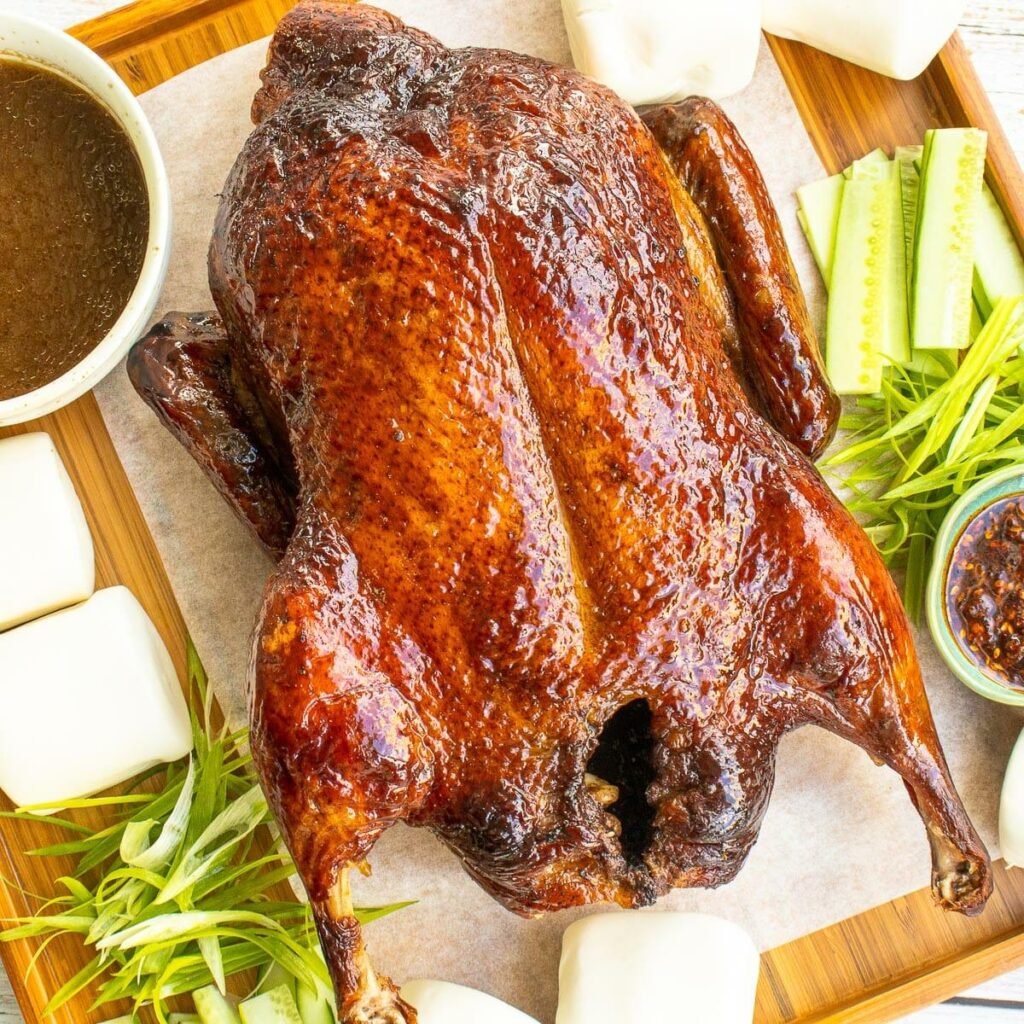
The global production of duck meat was roughly 4.3 million tons in 2012. It represents a valuable source for human consumption especially in Asian countries. Most of this duck meat is produced by growing Pekin Ducks. To improve the efficiency of this business, breeding companies have been selecting for superior performance in all traits of economic importance. Selection is focused on daily gain, meatiness and feed efficiency of broiler ducks, without neglecting the number of ducklings per female housed
The production of duck meat increased remarkably during the last 20 years, up to about 4.3 million tons in 2012. The main producer is China, producing more than 80% of all worldwide duck meat (FAOSTAT, 2015). According to information of Guémené et al. (2011) roughly 90% of it is based on fattened Pekin Ducks. Only 4% of is produced by Muscovy Ducks and 6% of it is available as a by-product from Poultry Producers Ducks, used for the fatty liver production.
Ducks have been very popular in Asia since historical times and they remain popular until today. The Chinese not only like the high nutritive value and tastiness of the duck meat, but also utilise their feet, tongues and other by-products for human consumption and appreciate the high quality of the feathers. The duck varieties, especially the Pekin Ducks, are very robust and can be kept under various climatic conditions, often in very simple housing.
Several breeding companies are selecting ducks for meat production. Although most of them are based outside of Asia, their market share in Asian countries is high and their breeding work has to consider market demands in Asia. This paper will focus on the selection of Pekin Ducks for meat production.
Pekin Duck Behaviour
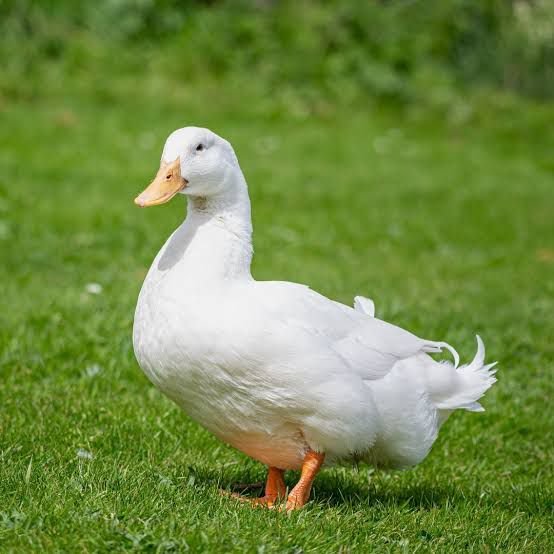
These birds are like mini–Runner Ducks with quite an upright stance but they have a slight chubby appearance. They are the perfect caricature of a duck with a bright yellow bill, orange shanks and toes and the ducklings are a bright yellow colour. The Pekins are quite common. These ducks have become very popular to farm as they grow quite quickly, are hardy, highly fertile and one of the largest size ducks. They are friendly calm ducks that are quite easy to train, however, they are one of the noisiest
The laying performance is usually tested over a period of 35 production weeks. Traditionally laying birds are kept in single cage systems. ORVIA is developing a fully automatic nest system to replace single cages in future. With the new nests the laying performance can be recorded in floor pens. During the testing period, time wise information about egg weight, shell strength, fertility and hatchability are recorded. Sperm quality is analysed before males are used for pedigree reproduction. For testing the fertility and hatchability of females, the use of pooled sperm is preferred.
The production of duck meat increased remarkably during the last 20 years, up to about 4.3 million tons in 2012. The main producer is China, producing more than 80% of all worldwide duck meat (FAOSTAT, 2015). According to information of Guémené et al. (2011) roughly 90% of it is based on fattened Pekin Ducks. Only 4% of is produced by Muscovy Ducks and 6% of it is available as a by-product from Mule Ducks, used for the fatty liver production.
Ducks have been very popular in Asia since historical times and they remain popular until today. The Chinese not only like the high nutritive value and tastiness of the duck meat, but also utilise their feet, tongues and other by-products for human consumption and appreciate the high quality of the feathers. The duck varieties, especially the Pekin Ducks, are very robust and can be kept under various climatic conditions, often in very simple housing.
Several breeding companies are selecting ducks for meat production. Although most of them are based outside of Asia, their market share in Asian countries is high and their breeding work has to consider market demands in Asia. This paper will focus on the selection of Pekin Ducks for meat production.
Estimates of heritabilities and correlations among traits are summarized in table 3. All selection criteria except liveability have a sufficiently high heritability to predict further improvement. Residual feed intake is (by definition) independent from body weight and a useful parameter to judge the conversion of feed to body mass. As in other poultry species, liveability has also limited genetic variation in Pekin Ducks and will be a preferential candidate for genomic selection.
With the exception of egg weight and shell density, the reproductive traits have a lower heritability compared to the broiler performance traits, but sufficient variation to make future progress possible.
